
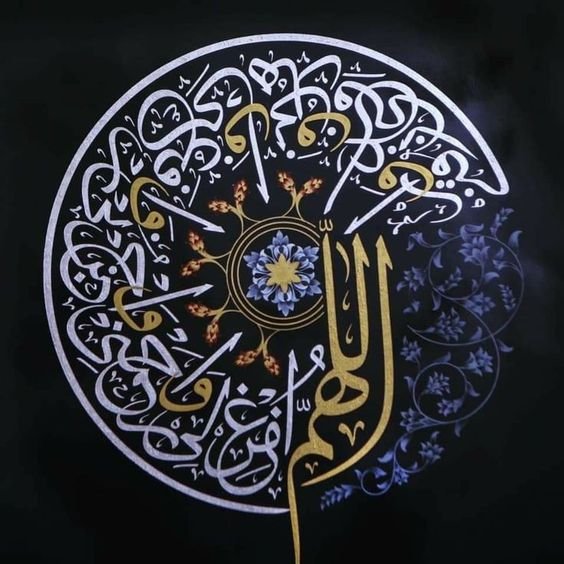
Astronomy in the Quran
For centuries, humans have gazed at the sky in wonder, searching for answers about the universe. Today, science has uncovered incredible truths about the cosmos, from the Big Bang to black holes and the expanding universe. Yet, over 1,400 years ago, the Quran revealed during a time when astronomy was still in its early stages, contained verses that strikingly align with these modern discoveries.
The Quran frequently urges people to reflect on the natural world, presenting celestial phenomena as signs of divine wisdom. This article examines four key astronomical concepts mentioned in the Quran: black holes, the Big Bang, the expansion of the universe, and the Big Crunch. By exploring these verses alongside their scientific interpretations, we can see how the Quran continues to inspire curiosity and deepen our understanding of the cosmos.
The Black Hole “The Vacuum Cleaner of the Universe”

“So I swear by the receding stars—those that run and disappear.” Quran: Surah At-Takwir 81:15-16
According to NASA, a black hole is a region in space where gravity is so powerful that nothing, not even light, can escape. These cosmic phenomena form when massive stars collapse under their own gravity, creating a gravitational field so intense that it distorts space-time. While black holes themselves are invisible, scientists detect them by observing their effects on nearby stars, light, and space. As black holes consume matter, they often emit intense bursts of energy.
Remarkably, the Quran described concepts resembling black holes long before their scientific discovery in 1967. It uses specific Arabic terms that align with black hole characteristics:
– “الخُنَّس” (al-khunnas): Refers to something that recedes, withdraws, or becomes hidden.
– “الْجَوَارِ” (al-Jawār): Means those that move or travel.
– “الْكُنَّسِ” (al-kunnas): Describes something that is sweeping
These beautifully encapsulate the key features of the black hole: When Allah says ‘Al- Khunnas’, this can refer to their invisible nature, as they do not emit light and remain hidden from view, detectable only through their gravitational effects, mirroring the Quranic idea of “disappearing” stars. Then Allah says ‘Al-jawar’ which can be the Quranic reference to celestial objects “running their course”. This relates to how black holes are traveling through space or orbiting other stars. Then lastly the mention of ‘Al-Kunnas’ can be related to their ability to sweep in surrounding matter including light, which is akin to its original translation of the word that refers to something that “sweeps” things into itself.
This verse can be interpreted as a poetic yet strikingly accurate depiction of black holes or neutron stars objects that are invisible but exert immense gravitational forces.
The Big Bang theory & Expansion of the Universe

“Do the disbelievers not realize that the heavens and earth were ˹once˺ one mass then We split them apart? And We created from water every living thing. Will they not then believe?” – Quran: Surah Al-Anbya 21:30
“We built the universe with ˹great˺ might, and We are certainly expanding ˹it˺. – Quran: Surah Adh-Dhariyat 51:47
“On that Day We will roll up the heavens like a scroll of writings. Just as We produced the first creation, ˹so˺ shall We reproduce it. That is a promise binding on Us. We truly uphold ˹Our promises˺!” – Quran: Surah Al-Anbya 21:104
The Big Bang theory, proposed by astronomer Georges Lemaître, explains the origin of the universe. It suggests that the universe began as an incredibly small, dense point and rapidly expanded, much like an inflating balloon, growing from smaller than an electron to nearly its current size.
Interestingly, the Quran contains descriptions that align with this theory. It states that the heavens and Earth were once a single entity before being separated. Muslim scholars interpreted this verse in surah Al-Anbiya verse 30 where Allah says: ‘ Do the disbelievers not realize that the heavens and earth were ˹once˺ one mass then We split them apart’. This verse used the Arabic words ‘ratq’ (meaning ‘joined together” or “closed up”) and ‘fataq’ (meaning “to separate” or “ruptured”).
These terms suggest a process of creation through separation, similar to the Big Bang’s concept of a singularity expanding into the universe.
The expansion of the universe is a key piece of evidence that it originated from nothing. In 1929, Edwin Hubble discovered that galaxies are moving away from each other, proving the universe is expanding. Long before telescopes existed or Hubble formulated his law, the Quran, recited by Prophet Muhammad (ﷺ) to his companions, described the universe as expanding. This ancient revelation aligns with modern scientific understanding, highlighting the Quran’s profound insights.
The Big Crunch Theory

“On the day when We will fold the heaven, like the folder compacts the books, and as We originated the first creation We shall return it; a promise (binding on Us); surely We will deliver” – Quran: Surah Al-Anbya 21:104
Scientists analysing data from DESI, an instrument designed to study Dark Energy’s effects on light, discovered that the universe’s acceleration is slowing down, contrary to the previous belief that it was constant.
This finding ties into the Big Crunch theory, which predicts that gravity will eventually dominate, causing the universe to collapse back in on itself. This theory, rooted in Einstein’s general relativity, suggests that the universe, which began with the Big Bang, could end in a similar contraction.
The Quran also describes a scenario where the heavens (universe) will be “folded back,” similar to rolling up a scroll. This mirrors the Big Crunch concept, where the universe, after expanding, might contract and collapse. Thus this description aligns with the scientific idea of a cyclical universe, potentially ending in a contraction before a new beginning long before modern astrophysics or advanced telescopes existed.
This alignment between ancient scripture and cutting-edge cosmology challenges natural explanations. The rational conclusion is that this knowledge originates from the Creator Himself the One who designed the universe and revealed its mysteries as a sign for those who reflect.
The Speed Of Light

“They challenge you ˹O Prophet˺ to hasten the torment. And Allah will never fail in His promise. But a day with your Lord is indeed like a thousand years by your counting.” – Quran: Surah Al-Hajj 22:47
Some researchers believe this verse hints at the speed of light by suggesting a time relationship between one divine day and a thousand human years.
The verse tells us that time passes differently for Allah compared to how we experience it. It suggests that what we see as 1,000 years is like just 1 day in the divine perspective.
If this idea is connected to physics, it can be linked to time dilation, a concept in Einstein’s Theory of Relativity, which explains how time moves slower for objects traveling at high speeds.
The Moon’s Orbit and Measuring Distance
In earlier interpretations, scholars looked at the movement of the moon to understand this time difference:
● The moon orbits Earth in about 27.3 days, but from our perspective, due to Earth’s movement, a full lunar month lasts about 29.5 days.
● In 1,000 years, the moon travels a massive distance.
● By calculating this total journey and dividing it by the number of seconds in a day, we get a speed close to 299,792 km/s, which is the speed of light.
A Relativity-Based Approach
A more modern perspective connects this verse to Einstein’s Special Relativity:
● Einstein discovered that when objects move close to the speed of light, time slows down for them.
● This effect is measured by the Lorentz Factor (γ), which is a number that tells us how much time slows down for an object moving at a certain speed.
● If 1 divine day equals 1,000 human years, this suggests a huge time dilation effect, which happens when something moves extremely fast—close to the speed of light.
By using mathematical formulas from relativity, researchers found that the speed needed for such a time dilation is nearly the speed of light itself.
This interpretation suggests that the Quran’s description of time, where one divine day equals a thousand human years, may align with modern physics, particularly the speed of light and time dilation in Einstein’s relativity. Calculations based on the moon’s orbit and relativistic equations show a connection to the speed of light.
Allah’s Oath on the Stars

“So I swear by the positions of the stars. And verily, that is a mighty oath, if you only knew” – Quran: Surah Al-Waqiah 56:75-76
This verse is extraordinary because it highlights the positions (مواقع, mawaqi’) of the stars rather than the stars themselves. Modern astronomy reveals that the actual position of a star is often different from where we see it due to the immense distances and the time it takes for light to travel. Many stars visible to us have already burned out, meaning we are only seeing their past light, an astonishing fact which was unknown at the time of revelation.
This subtle distinction of swearing by the positions rather than the stars captures a profound reality that could not have been known in the 7th century. This verse implies an advanced understanding of light travel, relativity, and cosmic distances, reinforcing the Quran’s miraculous knowledge of the universe.
‘Red Rose’ in the Sky

“How horrible will it be˺ when the heavens will split apart, becoming rose-red like ˹burnt˺ oil!” – Quran: Surah Ar-Rahman 55:37
In this verse we see a dramatic picture being painted of how the mentions how the ‘heavens will split apart, becoming rose-red like burnt oil’. If we take this verse and consider what modern science has discovered, the “red rose in the sky” refers to the nebular formations composed of ionized gases such as hydrogen and helium, which are dispersed across vast regions of space. These gases erupt with immense speed and intensity before gradually coming together to form massive gas clouds with temperatures exceeding 15,000 degrees Celsius.
One of the most striking examples of such a formation is the Rosette Nebula, named for its incredible resemblance to the petals of a blooming rose. A team of researchers, led by Leisa Townsley from Penn State University, used the Chandra X-ray telescope to study the Nebula in detail. Their observations revealed that the stars within the Rosette Nebula are colliding, generating gas with scorching temperatures of up to 6 million degrees. This discovery supports the Quranic description of the sky turning “rose-red, like burnt oil.”
What makes this revelation even more remarkable is that such celestial phenomena can only be observed through advanced technological instruments such as the telescope mentioned. Yet remarkably, the Qur’an described this vivid scene centuries ago, long before modern technology made it visible.