
Zakat on Savings
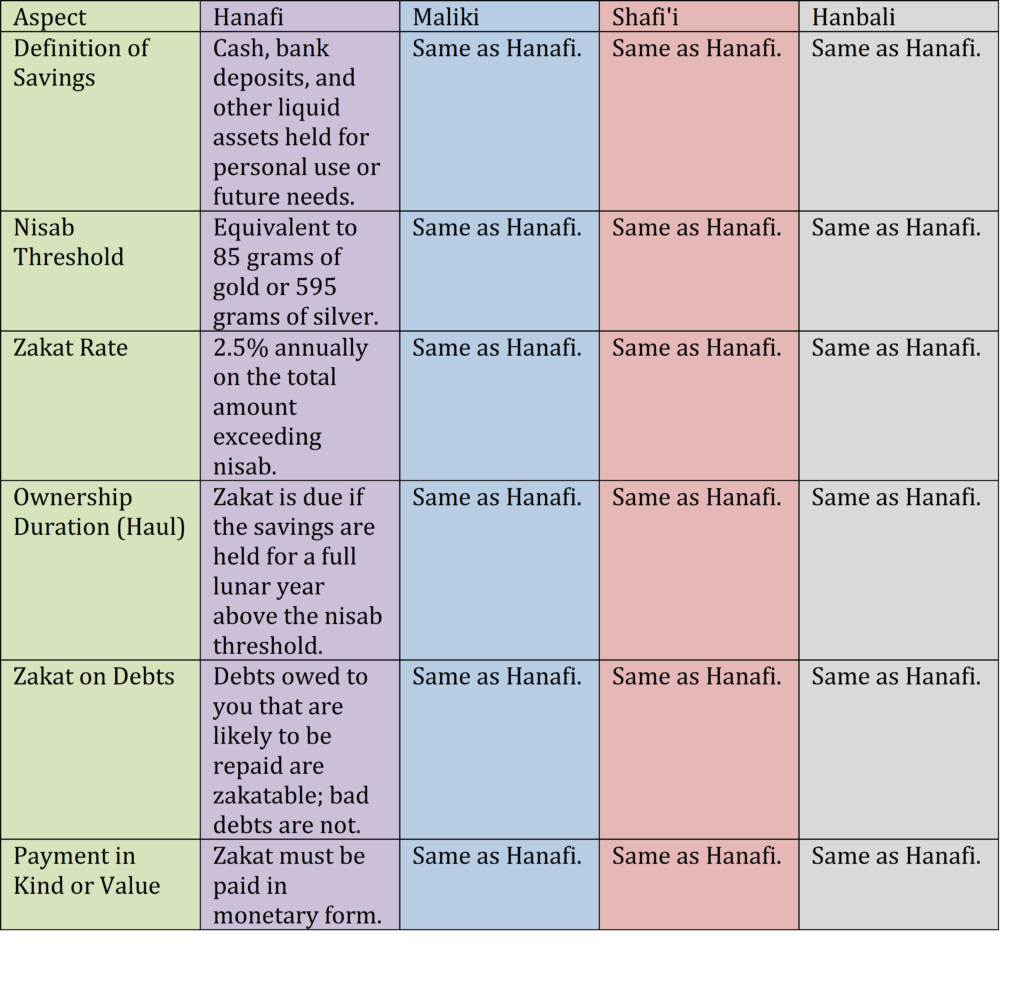
This section provides an overview of the rulings on zakat on savings across the four major Islamic schools of jurisprudence: Hanafi, Maliki, Shafi’i, and Hanbali.
Comparison of Zakat on Savings Across the Four Madhahib
This document provides a detailed comparison of the rulings on zakat for savings across the four major Islamic schools of jurisprudence: Hanafi, Maliki, Shafi’i, and Hanbali.
Comparison of Zakat on Savings Across the Four Madhahib
This document provides a detailed comparison of the rulings on zakat for savings across the four major Islamic schools of jurisprudence: Hanafi, Maliki, Shafi’i, and Hanbali.
Zakat on Business
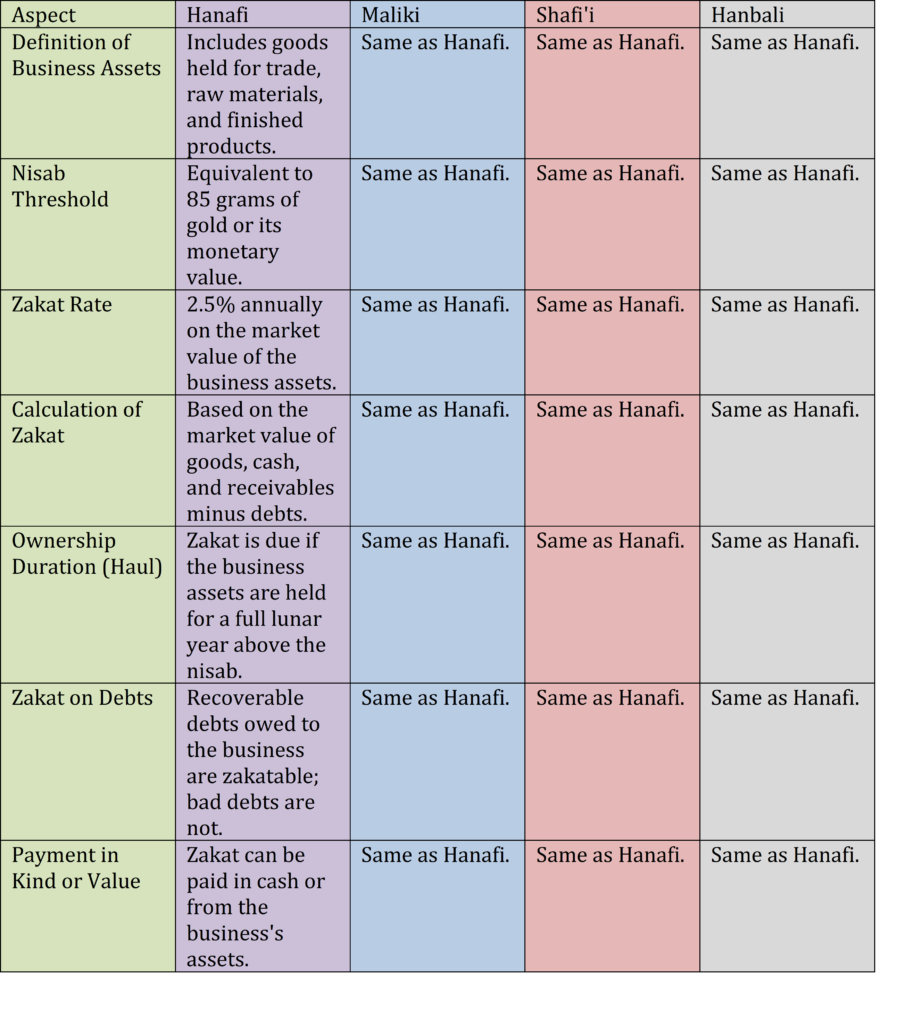
This section provides an overview of the rulings on zakat on business across the four major Islamic schools of jurisprudence: Hanafi, Maliki, Shafi’i, and Hanbali.
Comparison of Zakat on Business Across the Four Madhahib
This document provides a detailed comparison of the rulings on zakat for business assets across the four major Islamic schools of jurisprudence: Hanafi, Maliki, Shafi’i, and Hanbali.
Comparison of Zakat on Business Across the Four Madhahib
This document provides a detailed comparison of the rulings on zakat for business assets across the four major Islamic schools of jurisprudence: Hanafi, Maliki, Shafi’i, and Hanbali.
Zakat on Treasure
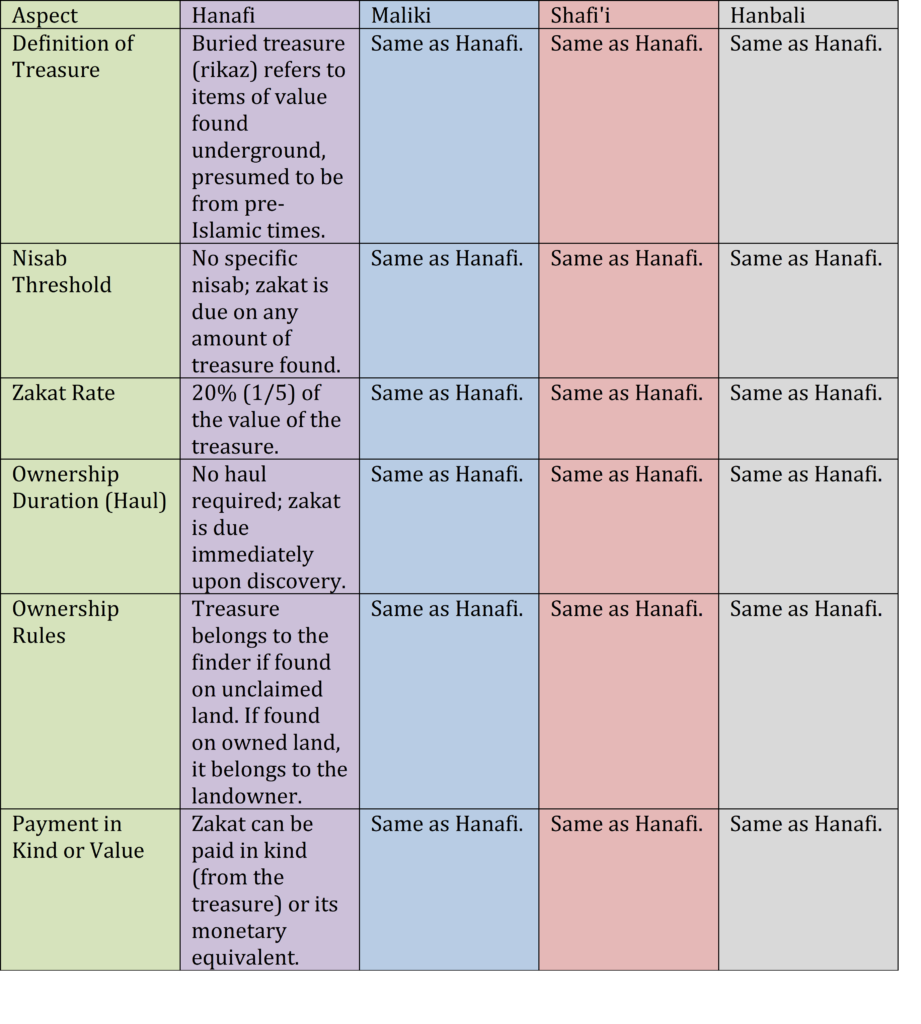
This section provides an overview of the rulings on zakat on treasure across the four major Islamic schools of jurisprudence: Hanafi, Maliki, Shafi’i, and Hanbali.
Comparison of Zakat on Treasure Across the Four Madhahib
This document provides a detailed comparison of the rulings on zakat for treasure (rikaz) across the four major Islamic schools of jurisprudence: Hanafi, Maliki, Shafi’i, and Hanbali.
Comparison of Zakat on Treasure Across the Four Madhahib
This document provides a detailed comparison of the rulings on zakat for treasure (rikaz) across the four major Islamic schools of jurisprudence: Hanafi, Maliki, Shafi’i, and Hanbali.
Zakat on Minerals
This section provides an overview of the rulings on zakat on minerals across the four major Islamic schools of jurisprudence: Hanafi, Maliki, Shafi’i, and Hanbali.
Aspect | Hanafi | Maliki | Shafi’i | Hanbali |
Nisab Threshold | No specific nisab; zakat is due on any significant amount extracted. | Same as Hanafi; no nisab required for minerals. | Nisab applies (85 grams of gold or its equivalent). | Same as Shafi’i; minerals are treated like gold and silver. |
Zakat Rate | 20% (1/5) of the value of extracted minerals. | Same as Hanafi. | 2.5% if the nisab threshold is met. | Same as Shafi’i. |
Types of Minerals Subject to Zakat | Precious metals (gold, silver) and other valuable substances extracted from the earth. | Same as Hanafi; includes all extractable valuable minerals. | Limited to precious metals and minerals meeting nisab. | Same as Shafi’i; focuses on precious metals and valuable minerals. |
Ownership Duration (Haul) | No haul required; zakat is due immediately upon extraction. | Same as Hanafi. | Haul is required; zakat is due after one lunar year. | Same as Shafi’i. |
Payment in Kind or Value | Zakat can be paid in kind (from the minerals) or its monetary equivalent. | Same as Hanafi. | Monetary payment is preferred but payment in kind is allowed. | Same as Shafi’i; either is acceptable. |
Comparison of Zakat on Minerals Across the Four Madhahib
This document provides a detailed comparison of the rulings on zakat for minerals across the four major Islamic schools of jurisprudence: Hanafi, Maliki, Shafi’i, and Hanbali.
Zakat on Money
This section provides an overview of the rulings on zakat on money across the four major Islamic schools of jurisprudence: Hanafi, Maliki, Shafi’i, and Hanbali.
Aspect | Hanafi | Maliki | Shafi’i | Hanbali |
Nisab Threshold | Equivalent to 85 grams of gold or 595 grams of silver. | Same as Hanafi. | Same as Hanafi. | Same as Hanafi. |
Zakat Rate | 2.5% annually on the total amount exceeding nisab. | Same as Hanafi. | Same as Hanafi. | Same as Hanafi. |
Zakat on Savings | Zakat is due on savings held for a full lunar year if above nisab. | Same as Hanafi. | Same as Hanafi. | Same as Hanafi. |
Zakat on Business Money | Zakat is due on liquid assets, profits, and inventory of a business if above nisab. | Same as Hanafi. | Same as Hanafi. | Same as Hanafi. |
Zakat on Debts Owed to You | Debts likely to be repaid are zakatable; doubtful debts are not. | Same as Hanafi. | Same as Hanafi. | Same as Hanafi. |
Ownership Duration (Haul) | Zakat is due if the money is held for a full lunar year above the nisab threshold. | Same as Hanafi. | Same as Hanafi. | Same as Hanafi. |
Payment in Kind or Value | Zakat must be paid in monetary form. | Same as Hanafi. | Same as Hanafi. | Same as Hanafi. |
Comparison of Zakat on Money Across the Four Madhahib
This document provides a detailed comparison of the rulings on zakat for money across the four major Islamic schools of jurisprudence: Hanafi, Maliki, Shafi’i, and Hanbali.
Zakat on Properties
This section provides an overview of the rulings on zakat on properties across the four major Islamic schools of jurisprudence: Hanafi, Maliki, Shafi’i, and Hanbali.
Aspect | Hanafi | Maliki | Shafi’i | Hanbali |
Zakat on Personal Residence | Exempt; personal residences are not zakatable. | Same as Hanafi. | Same as Hanafi. | Same as Hanafi. |
Zakat on Rental Properties | Zakat is due on the rental income if it reaches nisab and is held for a lunar year. | Same as Hanafi. | Same as Hanafi. | Same as Hanafi. |
Zakat on Properties for Trade | Properties intended for trade are zakatable at 2.5% of their market value annually. | Same as Hanafi. | Same as Hanafi. | Same as Hanafi. |
Nisab Threshold | Equivalent to 85 grams of gold or its monetary value for zakatable properties. | Same as Hanafi. | Same as Hanafi. | Same as Hanafi. |
Ownership Duration (Haul) | Zakat is due if the property or its income is held for a full lunar year above the nisab threshold. | Same as Hanafi. | Same as Hanafi. | Same as Hanafi. |
Payment in Kind or Value | Zakat can be paid in cash or from the property’s income. | Same as Hanafi. | Same as Hanafi. | Same as Hanafi. |
Comparison of Zakat on Properties Across the Four Madhahib
This document provides a detailed comparison of the rulings on zakat for properties across the four major Islamic schools of jurisprudence: Hanafi, Maliki, Shafi’i, and Hanbali.
Zakat on Silver, Gold, and Metals
This section provides an overview of the rulings on zakat on silver, gold, and metals across the four major Islamic schools of jurisprudence: Hanafi, Maliki, Shafi’i, and Hanbali.
Aspect | Hanafi | Maliki | Shafi’i | Hanbali |
Nisab Threshold for Silver | 595 grams of pure silver or its equivalent in value. | Same as Hanafi. | Same as Hanafi. | Same as Hanafi. |
Nisab Threshold for Gold | 85 grams of pure gold or its equivalent in value. | Same as Hanafi. | Same as Hanafi. | Same as Hanafi. |
Nisab Threshold for Other Metals | No specific nisab; zakat applies to precious metals (gold and silver). | Same as Hanafi; other metals are treated case-by-case. | Nisab applies only to gold and silver; other metals are not subject to zakat. | Same as Shafi’i. |
Zakat Rate | 2.5% annually for gold and silver above the nisab threshold. | Same as Hanafi. | Same as Hanafi. | Same as Hanafi. |
Metals Extracted from the Earth | 20% (1/5) of extracted value for gold and silver; others treated case-by-case. | Same as Hanafi; extraction zakat applies immediately upon extraction. | 2.5% annually if nisab is met and haul applies. | Same as Shafi’i. |
Jewelry for Personal Use | Gold and silver jewelry are subject to zakat if above nisab. | Exempt if for personal use (e.g., adornment). | Exempt unless used for trade. | Subject to zakat if above nisab, even if for personal use. |
Payment in Kind or Value | Allowed to pay zakat in kind (gold/silver) or monetary equivalent. | Same as Hanafi; monetary payment is acceptable. | Same as Hanafi; monetary payment preferred but in-kind payment allowed. | Same as Hanafi. |
Ownership Duration (Haul) | Zakat is due after one lunar year of ownership if above nisab. | Same as Hanafi. | Same as Hanafi. | Same as Hanafi. |
Comparison of Zakat on Silver, Gold, and Metals Across the Four Madhahib
This document provides a detailed comparison of the rulings on zakat for silver, gold, and other metals across the four major Islamic schools of jurisprudence: Hanafi, Maliki, Shafi’i, and Hanbali.
Zakat on Agriculture
This section provides an overview of the rulings on zakat on agriculture across the four major Islamic schools of jurisprudence: Hanafi, Maliki, Shafi’i, and Hanbali.
Aspect | Hanafi | Maliki | Shafi’i | Hanbali |
Nisab Threshold | 650 kg (5 wasq) of harvestable crops. | Same as Hanafi. Applies to crops typically stored and measured. | Same as Hanafi. Includes all staple and measurable crops. | Same as Hanafi. Includes staple crops and grains. |
Zakat Rate | 10% for crops irrigated by natural means (e.g., rain). 5% for crops irrigated artificially. | Same as Hanafi. | Same as Hanafi. | Same as Hanafi. |
Types of Crops Subject to Zakat | Staple foods, fruits, and grains that can be stored and measured. | Same as Hanafi. Includes olives, dates, wheat, and barley. | Same as Hanafi. Includes crops typically consumed or traded. | Same as Hanafi. Includes all measurable staple crops. |
Harvest Time | Zakat is due at the time of harvest. | Same as Hanafi. | Same as Hanafi. | Same as Hanafi. |
Exemptions | Crops below the nisab are exempt. Crops for personal use are not zakatable. | Same as Hanafi. | Same as Hanafi. | Same as Hanafi. |
Payment in Kind or Value | Zakat can be paid in kind (from the produce) or its monetary equivalent. | Payment in kind is preferred but monetary payment is allowed. | Monetary payment is permitted but in-kind payment is encouraged. | Either in kind or monetary value is acceptable, with a preference for in kind. |
Comparison of Zakat on Agriculture Across the Four Madhahib
This document provides a detailed comparison of the rulings on zakat for agriculture across the four major Islamic schools of jurisprudence: Hanafi, Maliki, Shafi’i, and Hanbali.
Zakat on Gold
This section provides an overview of the rulings on zakat on gold across the four major Islamic schools of jurisprudence: Hanafi, Maliki, Shafi’i, and Hanbali.
Aspect | Hanafi | Maliki | Shafi’i | Hanbali |
Nisab Threshold | 85 grams of pure gold or its equivalent in value. | Same as Hanafi. Gold in any form is included. | Same as Hanafi. Nisab applies to pure gold only. | Same as Hanafi. Nisab applies to pure gold or its value. |
Zakat Rate | 2.5% of the total gold value or weight annually. | Same as Hanafi. | Same as Hanafi. | Same as Hanafi. |
Jewelry for Personal Use | Subject to zakat if it exceeds the nisab threshold. | Exempt if used for personal purposes (e.g., adornment). | Same as Maliki. Exempt unless used for trade. | Subject to zakat if it exceeds nisab, even if for personal use. |
Gold Mixed with Other Metals | Only the gold content is zakatable. | Same as Hanafi. | Same as Hanafi. | Same as Hanafi. |
Payment in Kind or Value | Allowed to pay zakat in gold or its monetary equivalent. | Preferred to pay in gold, but monetary payment is permitted. | Monetary payment is allowed but paying in kind is encouraged. | Either gold or monetary value is acceptable, with a preference for in kind. |
Ownership Duration (Haul) | Gold must be owned for a full lunar year before zakat is due. | Same as Hanafi. | Same as Hanafi. | Same as Hanafi. |
Comparison of Zakat on Gold Across the Four Madhahib
This document provides a detailed comparison of the rulings on zakat for gold across the four major Islamic schools of jurisprudence: Hanafi, Maliki, Shafi’i, and Hanbali
Zakat on Livestock
This section provides an overview of the rulings on zakat on livestock across the four major Islamic schools of jurisprudence: Hanafi, Maliki, Shafi’i, and Hanbali.
Aspect | Hanafi | Maliki | Shafi’i | Hanbali |
Nisab and Grazing | Livestock must meet the nisab and graze freely for most of the year. | Same as Hanafi. Grazing freely is emphasized. | Same as Hanafi. Grazing must be purely natural. | Same as Hanafi. Grazing freely is a strict requirement. |
Zakat on Sheep | 1 sheep for every 40 sheep/goats, and for every additional 40. | Same as Hanafi, but interpretations may differ for exact nisab. | Same as Hanafi. Grazing sheep must be zakatable. | Same as Hanafi. Grazing freely must be confirmed to apply zakat. |
Zakat on Camels | 1 sheep/goat for every 5 camels; increments increase proportionally. | Same as Hanafi; differences arise for herds over 25 camels. | Same as Hanafi with detailed rules for larger herds. | Same as Hanafi. Detailed rules are identical. |
Zakat on Cows | 1 calf (1 year old) for every 30 cows; 2 calves for 40 cows. | Same as Hanafi; calf age interpretation differs slightly. | Same as Hanafi; grazing rules strictly enforced. | Same as Hanafi; details for larger herds match Shafi’i. |
Mixed Livestock | Mixed livestock types are combined to determine nisab. | Same as Hanafi; variations for herd proportions. | Same as Hanafi; mixed herds are zakatable. | Same as Hanafi; calculation methods may vary slightly. |
Payment in Value | Allowed if monetary equivalent is paid instead of animals. | Generally permitted; livestock payment preferred. | Allowed but in-kind payment is encouraged. | Allowed but in-kind payment is recommended. |
Comparison of Zakat on Livestock Across the Four Madhahib
This document provides a detailed comparison of the rulings on zakat for livestock (camels, sheep/goats, and cows) across the four major Islamic schools of jurisprudence: Hanafi, Maliki, Shafi’i, and Hanbali.
Comparison of Pillars of Zakat
This section provides an overview of the rulings on comparison of pillars of zakat across the four major Islamic schools of jurisprudence: Hanafi, Maliki, Shafi’i, and Hanbali.
Pillars of Zakat | Hanafi | Maliki | Shafi’i | Hanbali |
Intention (Niyyah) | Fard: Must make the intention to give zakat for Allah’s sake. | Fard: Intention required at the time of payment. | Fard: Niyyah must be made during zakat payment. | Fard: Intention must accompany the act of giving zakat. |
Threshold (Nisab) | Fard: Nisab is 87.48g gold or 612.36g silver. | Fard: Same as Hanafi regarding nisab. | Fard: Nisab for gold and silver applies. | Fard: Same nisab amount as Hanafi. |
Time (Hawl) | Fard: Zakat due after holding wealth for one lunar year. | Fard: Same one-year requirement. | Fard: Wealth must be held for one lunar year. | Fard: Zakat becomes obligatory after a lunar year. |
Zakat on Gold and Silver | 2.5%: Zakat due on gold and silver above nisab. | 2.5%: Same for gold and silver. | 2.5%: Applicable to gold and silver. | 2.5%: Zakat required for gold and silver above nisab. |
Zakat on Cash and Savings | 2.5%: If above nisab and held for a year. | 2.5%: Zakat on cash and savings above nisab. | 2.5%: Applies to all liquid assets. | 2.5%: Cash and savings above nisab are zakatable. |
Zakat on Livestock | 1 sheep/goat per 40 sheep/goats; 1 camel per 5 camels. | Same rates as Hanafi for livestock. | Rates apply to livestock based on Shari’ah. | Follows similar rates for livestock. |
Zakat on Agricultural Produce | 10%: If irrigated by rain; 5% if artificially irrigated. | Same rates as Hanafi for crops. | 10% rain-irrigated, 5% artificially irrigated. | Same percentages for rain/artificial irrigation. |
Zakat on Business Goods | 2.5%: Calculated on current value of trade goods. | 2.5%: Zakat on business inventory. | 2.5%: Zakat on tradeable goods. | 2.5%: Business goods require zakat. |
Zakat on Minerals and Treasures | 20%: Zakat on buried treasure or extracted minerals. | 20%: Same as Hanafi. | 20%: Applicable to discovered wealth. | 20%: Zakat applies to minerals and treasures. |
Recipients of Zakat | Eight categories: Poor, needy, zakat collectors, converts, freeing captives, debtors, Allah’s cause, travelers. | Same eight categories. | Eight groups specified in the Qur’an. | Eight categories as defined in Qur’an (9:60). |
Comparison of Pillars of Zakat Across the Four Madhhabs
Explanation:
This table outlines the pillars of zakat as per the four Sunni madhhabs. It includes key requirements like intention (niyyah), nisab (threshold), hawl (time), and zakatable items such as gold, silver, livestock, crops, and business goods. The document also highlights the eight categories of recipients specified in Qur’an (9:60). Differences in calculation or application reflect the unique jurisprudential reasoning of each madhhab.